If you are seeing your child’s glasses number increasing year by year, you are certainly not alone. Myopia or nearsightedness is increasing at an alarming rate among children because of increased screen use and less outdoor activities.
What’s the good news? We have ways of slowing its development and safeguarding the vision of our children.
Let’s understand everything step by step.
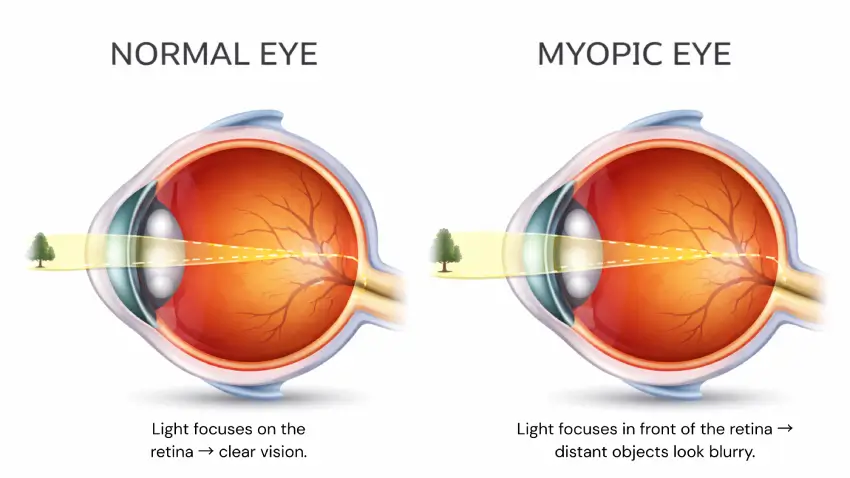
Myopia, commonly known as nearsightedness, is a vision condition where close objects appear clear, but distant objects look blurry.
This is when the eyeball grows a bit too long, or the cornea is curved too much. Light will then focus in front of the retina instead of directly on the retina.
Children with myopia may have a vision problem, such as not being able to clearly see the board at school, road signs, or the TV.
Typically, myopia results from a combination of genetic and environmental factors.
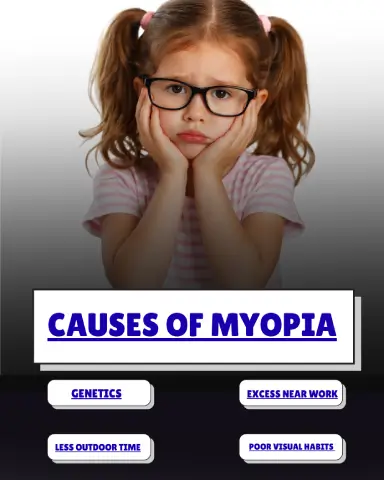
If one or both parents are myopic, the child’s risk of developing myopia is increased.
Long periods of reading, mobile devices, tablets, and working with computers may cause it.
Natural daylight is vital in the growth of healthy vision. Kids who stay indoors may be in danger.
Too much reading, improper posture, and prolonged attention without intervals may exacerbate the condition.
Look out for the early warning signals:
✔ Difficulty seeing distant objects
✔ Squinting frequently
✔ Sitting very close to TV or holding books near the face
✔ Complaints of headaches
✔ Eye rubbing or watering
If you notice these signs, eye check-up is important.
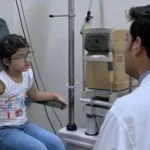
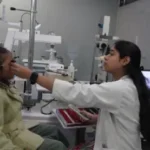
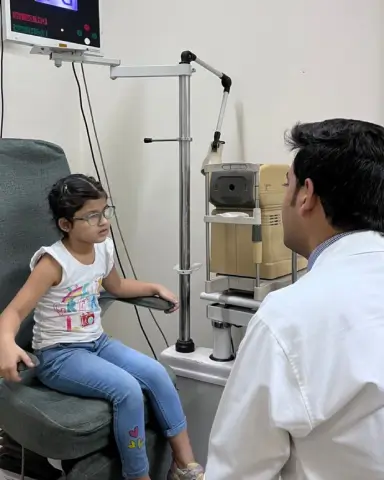
An eye specialist will perform a detailed examination that may include:
1. Visual acuity test – It measures clarity of distance vision
2. Refraction test – It finds the correct spectacle power
3. Retinoscopy – It objective assessment of refractive error
4. Axial length – It measures the eye growth measurement (in myopia clinics)
5. Dilated retina exam – It ensures internal eye health
Regular monitoring is crucial, especially for growing children.
Myopia Control is the set of treatments aimed at attempting to reduce the rate of increase in eye power in children and teenagers. Glasses or regular contact lenses may help your child to see more clearly but do not prevent the eye from gradually becoming more minus over time.
As myopia continues to progress, the length of the eye increases. Higher numbers increase the risk of serious problems later in life such as retinal detachment, glaucoma, and myopic macular damage.
That’s why controlling progression during the growing years is extremely important.
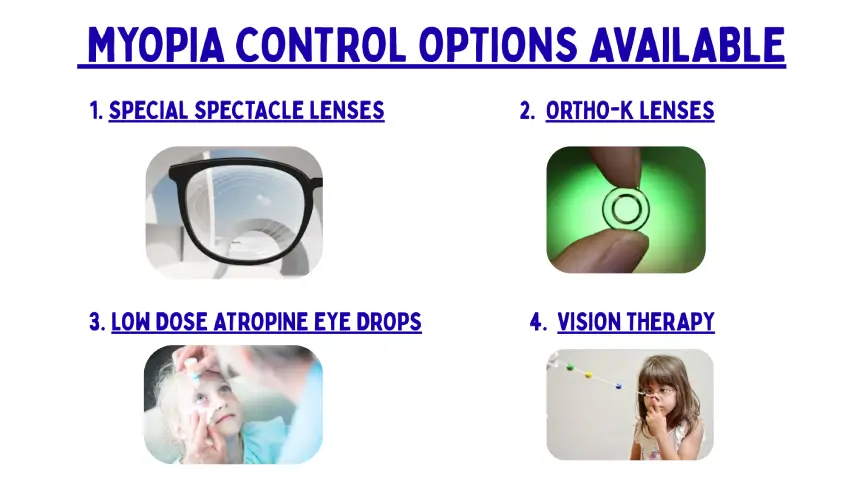
This complex lens is also effective for managing peripheral vision, and the elongation rate of the eye may decrease compared to normal lenses.
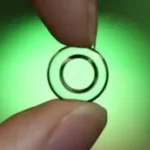
These are lenses that children use while resting or sleeping. These lenses reshape the cornea of children in order to ensure they can see clearly the next day without having to use eye glasses. The lenses are also considered to be effective in slowing myopia.
These medicated drops, if administered at night, may also slow the growth of the eyes. They are normally recommended for children whose numbers are growing very rapidly.
It can sometimes assist with enhancing the capacity for concentration and reducing visual stress.
Having more activities, balanced visual practices, appropriate reading distances, and breaks in screen viewing are all essential parts of the control process.
Myopia control is especially helpful for:
✔ Children whose number increases every year
✔ Kids with myopic parents
✔ Early onset myopia (young age)
✔ Rapid progression
Myopia or near-sightiness is becoming common among children. A high power increase should not be neglected. Although wearing glasses will help you see better by clearing the blurred vision, myopia control is directed at the process of becoming worse because you want to protect your child from high powers. In addition, myopia often leads to other serious eye diseases.
Early detection, continued assessment, and a combination of appropriate treatments, which could involve special lenses, atropine eye drops, or lifestyle changes, can all help retain long-term vision.
However, if you realize your child is squinting to watch the television or is constantly having to sit closer to the television or needs more frequent changes in the power of the television set, then definitely it is time for your child to visit an eye specialist. Early intervention makes a lifetime of difference for your child’s eyes.
No, but it can be effectively controlled and corrected.
Most commonly between 6 and 14 years.
As soon as progression is noticed.
It is common, but modern treatments can slow it.
Yes, when prescribed and monitored by an eye specialist.
Many treatments reduce progression by 40–70% depending on the child.
Usually yes, but the number may rise much slower.
Yes. Studies show children who spend more time outdoors have slower progression.
Typically every 6 months during growing years.
High myopia can increase the risk of retinal problems, glaucoma, and vision loss later.
It is a major contributing factor, along with genetics and reduced daylight exposure.
It depends on age, eye power, lifestyle, and medical evaluation.
Copyright © 2026 | MYOSAVERS | All Rights Reserved.