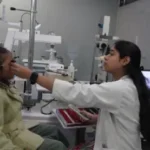
Myopia, also known as Myopia, is becoming increasingly common among children due to excessive screen time, reduced outdoor activities, and prolonged near work. Many parents notice their child’s glasses number increasing every year and wonder if there is a way to slow it down.
One of the most effective modern solutions recommended by eye specialists is Atropine eye drops.
These drops are widely used worldwide to slow the progression of myopia in children and help protect long-term eye health.
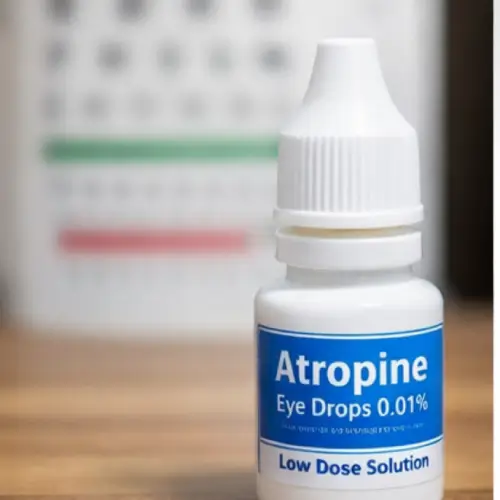
Atropine eye drops are prescription eye drops used in ophthalmology for several purposes, including myopia control in children.
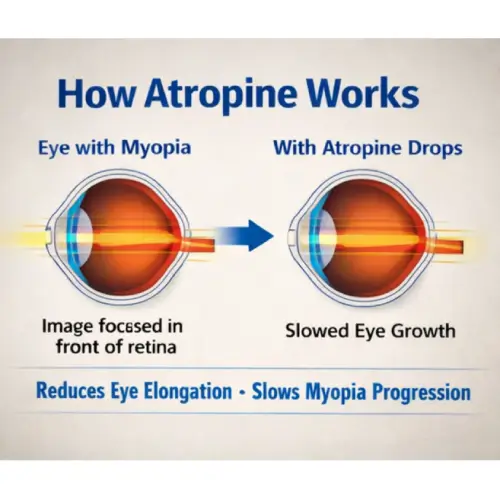
In low concentrations (such as 0.01%, 0.025%, or 0.05%), atropine drops help slow down the elongation of the eyeball, which is the main cause of increasing myopia.
Doctors usually prescribe these drops to children whose glasses power is rapidly increasing every year.
Myopia is rising rapidly across the world. Several lifestyle factors contribute to this problem:
Without proper control, myopia can continue increasing during childhood and teenage years.
Atropine eye drops work by reducing the signals that cause excessive eye growth.
When used regularly, they can:
Many clinical studies have shown that low-dose atropine can reduce myopia progression by 40–60% in children.
Here are some major advantages of atropine therapy:
Atropine drops help prevent rapid increase in glasses power.
Low-dose atropine is considered safe when prescribed by an eye specialist.
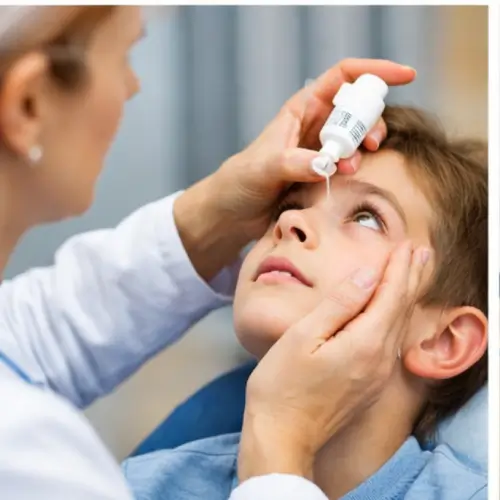
Usually applied once daily at night.
Most commonly prescribed for children between 5 to 16 years of age.
Unlike vision correction procedures, atropine therapy is non-invasive.
Eye doctors may recommend atropine drops for children who:
However, the treatment should always be prescribed by an ophthalmologist after proper eye examination.
Typical instructions include:
Always follow the doctor’s instructions regarding dosage and duration.
Low-dose atropine is generally safe, but some mild side effects may occur:
These effects are usually temporary and mild.
If any unusual symptoms appear, consult your eye doctor immediately.
For best results, doctors often recommend combining atropine therapy with healthy visual habits:
Combining these habits with atropine treatment can significantly help control myopia progression.
Atropine does not permanently cure myopia, but it slows down the rate at which myopia increases.
The treatment usually continues for 1–2 years or longer, depending on the child’s condition and the doctor’s recommendation.
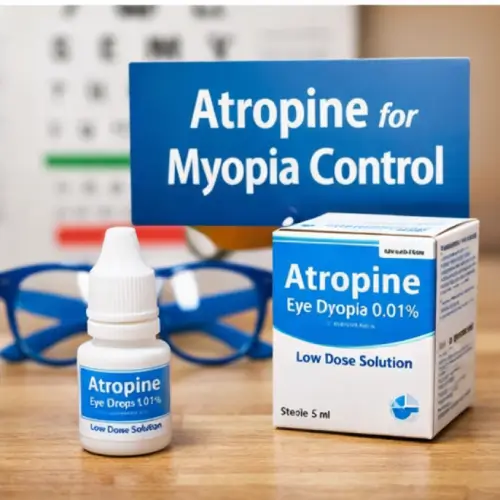
Atropine eye drops have emerged as one of the most effective and scientifically proven treatments for controlling myopia progression in children.
When used under proper medical supervision, these drops can help protect your child’s vision and prevent high myopia in the future.
If your child’s glasses number is increasing frequently, it is advisable to consult an eye specialist and explore whether atropine therapy is suitable.
Atropine eye drops are used to slow the progression of myopia in children and for certain eye examinations and treatments.
They are usually prescribed for children between 5 and 16 years, depending on the doctor’s evaluation.
Most doctors recommend one drop in each eye at night.
Yes, low-dose atropine is considered safe when used under an ophthalmologist’s supervision.
No, they do not cure myopia but slow down its progression.
Treatment may continue for 1–2 years or longer, depending on the child's eye condition.
Some children may experience mild light sensitivity or slight blurred near vision, but serious side effects are rare.
These drops usually slow down the increase in power, rather than reducing existing power.
Yes, children usually continue wearing glasses while using atropine therapy.
They are mainly used for myopia control in children, but doctors may prescribe them for other eye conditions in adults.
Copyright © 2026 | MYOSAVERS | All Rights Reserved.