Children rely heavily on their vision to learn, play, and explore the world around them. In fact, nearly 80% of learning during early childhood happens through vision. This is why pediatric eye care plays a crucial role in a child’s overall development.
Many eye problems in children may not show obvious symptoms in the beginning. Regular eye check-ups help detect issues early and ensure that children develop healthy vision for the future.
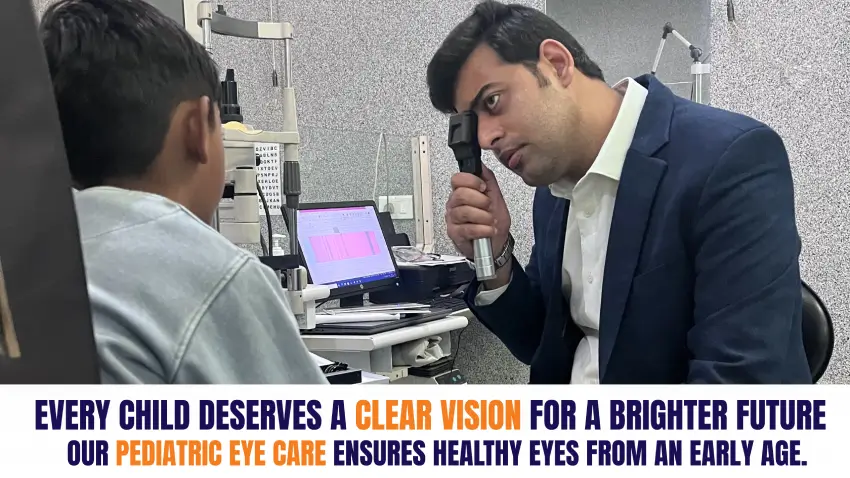
Pediatric eye care focuses on diagnosing, treating, and managing eye conditions in infants, children, and teenagers. Since children’s eyes are still developing, early detection and treatment of vision problems are extremely important.
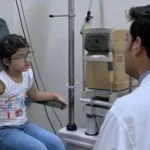
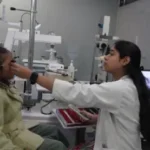
Pediatric eye specialists use specialised diagnostic techniques and child-friendly approaches to evaluate vision, eye alignment, and eye health.
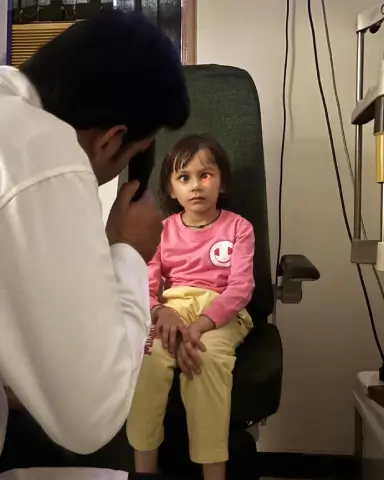
Several eye conditions can affect children. Some of the most common include:
Myopia is becoming increasingly common among children. Kids with myopia can see nearby objects clearly but struggle to see distant objects such as classroom boards.
If left untreated, myopia can progress rapidly and may increase the risk of serious eye diseases later in life.
Amblyopia occurs when one eye develops weaker vision than the other. The brain begins to favor the stronger eye, which can lead to permanent vision loss if not treated early.
Treatment may include vision therapy, glasses, or patching.
Strabismus occurs when both eyes do not align properly and may look in different directions. This can cause double vision or lazy eye.
Early diagnosis and treatment help improve eye coordination and visual development.
Refractive errors include:
These conditions affect the way light focuses on the retina and can usually be corrected with glasses or specialized contact lenses.
Children often do not realize they have vision issues. Parents should watch for the following signs:
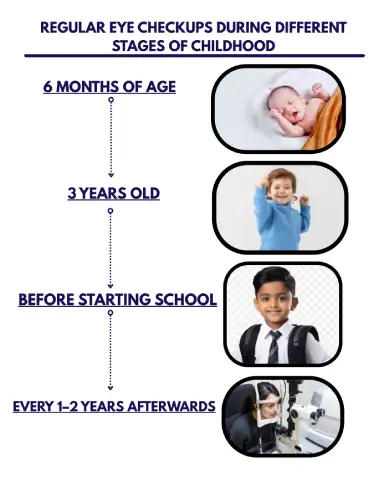
Eye experts recommend regular eye checkups during different stages of childhood:
Early eye exams help detect hidden vision problems that can affect learning and development.
Myopia cases in children are increasing due to increased screen time and reduced outdoor activities. Proper management can slow down the progression of myopia and protect long-term vision.
Modern treatments may include:
These treatments help manage myopia progression effectively.
Parents can help maintain their child’s eye health by following these simple tips:
✔ Limit screen time
✔ Encourage outdoor play
✔ Maintain proper reading distance
✔ Ensure good lighting while studying
✔ Schedule regular eye checkups
Healthy habits can reduce the risk of many childhood vision problems.
At Myosavers, we specialize in advanced pediatric eye care with a focus on early detection, myopia management, and vision therapy.
Our services include:
Our goal is to help children achieve clear, comfortable, and healthy vision for life.
Children should ideally have their first eye examination at 6 months of age, followed by another exam at 3 years, and again before starting school. After that, regular eye checkups every 1–2 years are recommended.
Some common eye conditions in children include myopia (nearsightedness), hyperopia (farsightedness), astigmatism, amblyopia (lazy eye), and strabismus (squint). Early detection helps prevent long-term vision problems.
Signs of vision problems in children may include squinting, frequent eye rubbing, sitting too close to the TV, headaches, difficulty reading, or tilting the head while focusing. If you notice these symptoms, consult an eye specialist.
Myopia, also known as nearsightedness, is a condition where children can see nearby objects clearly but have difficulty seeing distant objects. It is becoming increasingly common due to increased screen time and reduced outdoor activities.
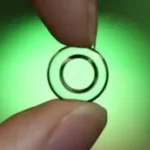
Yes, myopia progression can be managed using modern treatments such as myopia control lenses, orthokeratology (Ortho-K) lenses, and vision therapy. Early treatment helps slow down the progression of myopia.
Amblyopia, or lazy eye, occurs when one eye develops weaker vision than the other. The brain begins to rely more on the stronger eye, which affects visual development. Early treatment with vision therapy, glasses, or patching can improve vision.
Experts recommend limiting screen time and encouraging regular breaks. Following the 20-20-20 rule can help reduce digital eye strain: every 20 minutes, look at something 20 feet away for 20 seconds.
Parents can help maintain their child’s eye health by encouraging outdoor activities, limiting screen time, ensuring proper lighting while reading, providing a healthy diet, and scheduling regular eye checkups.
Vision therapy is a customized treatment program that improves eye coordination, focusing ability, and visual skills. It is often used to treat conditions like lazy eye, squint, and certain learning-related vision problems.
You should consult a pediatric eye specialist if your child shows signs of vision problems, complains about blurred vision, experiences frequent headaches, or has difficulty focusing on school activities.
Copyright © 2026 | MYOSAVERS | All Rights Reserved.